
18 U.S. Code § 1114 - Protection of United States Officers and Employees
18 U.S. Code 1114 criminalizes killing or attempting to kill a U.S. government officer or employee, or anyone assisting them, during official duties. It covers murder, manslaughter, and attempted murder or manslaughter, with penalties based on the relevant statutes.
In 1996, the law was expanded to include all federal employees, and their immediate family members are also protected from murder or attempted murder under 18 U.S. Code 115.
Every state enforces severe penalties for murder and manslaughter. When such crimes are prosecuted federally, the possible punishments increase significantly. Typically, these charges are handled at the state level. However, if the victim is a U.S. officer or federal employee performing their duties, federal jurisdiction overrides state jurisdiction.
Ensuring the safety of individuals serving the U.S. government is crucial. This section plays a vital role in the legal system by safeguarding federal officers and employees from violence and threats.
Being accused of murdering a federal officer or employee can lead to severe penalties, including life imprisonment or the death penalty, highlighting the gravity of such charges.
Key Takeaways
- This federal law provides legal protections for federal officers and employees by making acts of violence or attempts to harm them during their official duties a criminal offense.
- It specifies particular protections and enforces strict penalties for breaches. This reflects the government's commitment to safeguarding its personnel and allowing them to carry out their responsibilities without fear of harm.
- Federal officers and employees often face hazardous and unpredictable situations. Whether they are enforcing laws, handling regulatory tasks, or performing other official duties, the risk of violence is a major concern.
- This law is part of a broader strategy to defend federal interests and maintain government integrity. It aligns with other laws aimed at ensuring the safety and security of federal workers, offering a comprehensive approach to protect those who serve the nation.
- By criminalizing acts of violence against these individuals, 18 U.S.C. 1114 acts as a strong deterrent and reassures federal employees that their safety is a priority.
- This law encompasses not only direct physical violence but also threats and efforts to intimidate or coerce.
- For legal professionals, understanding this law's scope and implications is crucial. It affects those who may be charged under it and influences the broader legal framework surrounding federal employee protection. This understanding is not just important, but it carries a significant weight of responsibility for legal professionals.
What Does 18 U.S.C. 1114 Say?
18 U.S. Code § 1114 - Protection of officers and employees of the United States says -

"(a) In General.-Whoever kills or attempts to kill any officer or employee of the United States or of any agency in any branch of the United States Government (including any member of the uniformed services) while such officer or employee is engaged in or on account of the performance of official duties, or any person assisting such an officer or employee in the performance of such duties or on account of that assistance, shall be punished-
(1) in the case of murder, as provided under section 1111.
(2) in the case of manslaughter, as provided under section 1112; or
(3) in the case of attempted murder or manslaughter, as provided in section 1113.
(b) Extraterritorial Jurisdiction.-
There is extraterritorial jurisdiction over the conduct prohibited by this section."
Who Is Protected?
This law is designed to safeguard a broad range of people, particularly those essential to the federal government's operations. But who exactly are these individuals, and what conduct violates this law?
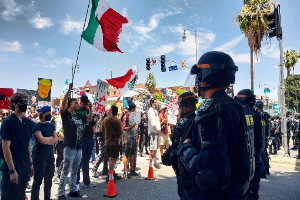
The statute primarily shields federal officers and employees—those working for any U.S. government department or agency. It ensures that individuals executing official duties can do so securely, protected from violence or threats.
This protection is especially crucial for federal law enforcement officers, who frequently encounter hazardous situations in the line of duty. The comprehensive nature of this protection should provide a sense of security and reassurance to all those supporting the federal government's functions.
The statute extends beyond federal employees to cover certain individuals performing official roles for the government.
This includes contractors and non-governmental personnel responsible for critical tasks vital to federal operations. Including these individuals ensures comprehensive protection for all those supporting the federal government's functions.
Extraterritorial Jurisdiction
A core aspect of 18 U.S.C. 1114 is its extraterritorial jurisdiction, a legal principle that allows the federal government to prosecute someone for killing or attempting to kill a federal officer or employee regardless of where the act takes place—whether inside or outside the United States.

This means that the law applies to acts of violence against federal officers or employees, even if they occur in a foreign country. This emphasizes the federal government's commitment to safeguarding its personnel during their official duties, both domestically and internationally.
The law applies to anyone who kills or attempts to kill a U.S. officer or employee, including members of the uniformed services. It also covers individuals helping federal officers or employees in their official duties.
The consequences for a defendant are substantial. If charged with killing or trying to kill a federal officer, federal law overrides state laws. This usually results in prosecution in a federal court, which often imposes harsher penalties and stricter sentencing guidelines than state courts.
The federal government has extensive resources for investigation and prosecution, making these charges especially serious—and increasing the likelihood of conviction compared to state court proceedings. This should impress upon the audience the gravity of the situation for the defendant.
Penalties for Harming Federal Officers
Federal sentencing is guided by the United States Sentencing Guidelines, which provide a framework for determining appropriate penalties.

These guidelines take into account various factors, including the severity of the crime, the defendant's criminal history, and any mitigating or aggravating circumstances.
For instance, a crime resulting in serious bodily injury generally leads to a more severe sentence than a less serious offense.
Understanding these guidelines is crucial for anyone charged under 18 U.S.C. § 1114. Although they encourage uniform sentencing, they also allow judges to account for specific case details.
In these cases, the role of a skilled federal criminal defense attorney is especially vital. They can help navigate the complex federal legal system, build a strong defense, and advocate for the best possible outcome for the defendant.
18 U.S.C. 1114 does not specify its own sentencing framework. Instead, it refers the court to the punishment provisions for murder, manslaughter, and their attempts as outlined in other sections of the U.S. Code.
Murder (18 U.S.C. 1111)
Murder is defined as the unlawful killing of a human with malice aforethought. Penalties vary: first-degree murder involves a premeditated killing or one during the commission of a serious crime, punishable by death or life imprisonment. Second-degree murder covers any other murder with malice, with penalties of imprisonment for a specific number of years or life.
Manslaughter (18 U.S.C. 1112)
Manslaughter is the illegal killing of a person without malicious intent. Penalties include voluntary manslaughter, which happens in a sudden quarrel or when someone acts in the heat of passion, punishable by a fine and/or up to 15 years in prison. Involuntary manslaughter occurs during the commission of an unlawful act that isn't a felony or a lawful act done without proper caution, and it may be penalized with a fine and/or up to 8 years in prison.
Attempted Murder or Manslaughter (18 U.S.C. 1113)
Attempting to commit these crimes also results in significant penalties. Attempted murder can lead to fines and/or imprisonment for up to 20 years. Attempted manslaughter can result in fines and/or up to 7 years of imprisonment.
Related Federal Statutes
18 U.S. Code Chapter 51 Part I, Homicide, has several related federal laws, including the following:
- 18 U.S.C. 1111. Murder
- 18 U.S.C. 1112. Manslaughter
- 18 U.S.C. 1113. Attempt to commit murder or manslaughter
- 18 U.S.C. 1114. Protection of officers and employees of the United States
- 18 U.S.C. 1115. Misconduct or neglect of ship officers
- 18 U.S.C. 1116. Murder or manslaughter of foreign officials, official guests, or internationally protected persons
- 18 U.S.C. 1117. Conspiracy to murder
- 18 U.S.C. 1118. Murder by a Federal prisoner
- 18 U.S.C. 1119. Foreign murder of United States nationals
- 18 U.S.C. 1120. Murder by escaped prisoners
- 18 U.S.C. 1121. Killing persons aiding Federal investigations or State correctional officers
- 18 U.S.C. 1122. Protection against the human immunodeficiency virus
Common Defenses
When involved in charges under this statute, our federal criminal defense attorneys will carefully examine each aspect of the government's case to identify vulnerabilities and develop a robust defense. Typical approaches often include:
- Self-Defense: A defendant can claim that their actions were necessary to protect themselves from imminent harm or death. This defense involves demonstrating that the defendant had a reasonable belief of immediate danger and responded with proportional force.
- Lack of Intent: To secure a murder conviction, the prosecution must demonstrate malice aforethought or premeditation. We might argue that the killing was accidental, unintentional, or did not involve the necessary criminal intent. This can result in a lesser charge, such as manslaughter, or, in some cases, a complete acquittal.
- Victim Was Not a Federal Officer or on Duty: The law specifically offers protection for federal officers and employees when they are engaged in or acting on their official duties. A possible defense could be arguing that the victim does not qualify as a federal officer under the law or that the incident was not related to their official responsibilities. This defense primarily aims to challenge the federal jurisdiction of the crime, suggesting that it should instead be handled in state courts, which often allow for more negotiation and lighter penalties, as well as higher chances of acquittal.
For additional information, contact the Hedding Law Firm in Los Angeles, California.
Related Content: