
Arizona Federal Criminal Defense Lawyers
When facing a federal criminal charge, it's vital to have the support of a seasoned federal defense attorney. At the Hedding Law Firm, we boast decades of experience in federal crimes and are adept at handling cases involving a variety of offenses. Our expertise will provide you with the confidence you need during this challenging time.
Whether you've been served with a complaint or are under investigation by federal law enforcement authorities, having a knowledgeable federal defense lawyer on your side can make all the difference in the outcome of your case.
We offer a free consultation to discuss your case and determine the best course of action to defend against a conviction in federal court. From handling the legal system to challenging evidence presented by federal agencies and task forces, we will work to protect your rights and achieve the best possible outcome for your case.
AZ State vs. Federal Crimes
There is a significant distinction between federal and state crimes in the United States justice system. This differentiation permits both federal and state governments to create, enforce, and adjudicate laws within their respective jurisdictions.

Federal crimes are violations of laws passed by the United States Congress. Such crimes are generally considered offenses against the United States.
Federal agencies, such as the FBI, DEA, ATF, and Homeland Security, investigate federal crimes.
Cases involving federal crimes are prosecuted by United States Attorneys, representing the federal government.
Federal cases are tried in federal courts, established under the U.S. Constitution. These courts operate under a distinct set of rules and procedures, including the Federal Rules of Criminal Procedure.
Common Types of AZ Federal Offenses
Federal criminal laws contain a broad range of offenses in Arizona that are prosecuted under the jurisdiction of federal courts. These crimes are considered violations of laws enacted by the U.S. Congress and often involve matters of crossing state lines or occurring on federal property, such as the following:
- Drug Trafficking. Drug trafficking laws are related to the illegal production, distribution, or sale of controlled substances. The Controlled Substances Act (CSA) classifies drugs into five schedules based on their potential for abuse, medical use, and safety or dependence liability. Drug trafficking involves substances like cocaine, heroin, methamphetamine, and fentanyl and can carry severe penalties, including lengthy prison sentences.
- Immigration Crimes. Immigration crimes make up a significant portion of federal criminal prosecutions in the state of Arizona. These offenses include illegally entering the United States, illegal reentry after deportation, and smuggling non-citizens into the country. The Department of Homeland Security, through agencies like ICE and CBP, investigates these crimes, which the Department of Justice then prosecutes.
- Human Smuggling. 18 U.S.C. 1324 defines human smuggling as facilitating, transporting, or harboring unauthorized aliens entering the United States. This law specifically seeks to penalize those who benefit from or assist in the illicit entry of foreigners into the country. It outlaws inducing or motivating aliens to enter or live in the United States illegally.
- Sex Trafficking. 18 U.S.C. 1591 defines sex trafficking as the exploitation of minors or adults through force, fraud, or coercion for commercial sex acts. This law enforces strict penalties against those who recruit, entice, or transport people for prostitution or other sexual purposes in exchange for value. It aims to safeguard victims and penalize perpetrators of such exploitation.
- White-Collar Crimes. Fraud and white-collar offenses involve deceptive practices intended for financial gain. These crimes include wire fraud, mail fraud, bank fraud, securities fraud, and health care fraud. They typically do not involve physical violence but result in significant financial harm to individuals and institutions.
- Cybercrimes. Technology has advanced cybercrimes that encompass a wide range of offenses involving computers and networks, including hacking, identity theft, internet fraud, and the distribution of child pornography. These crimes are investigated by specialized units within federal agencies, such as the FBI's Cyber Division.
- Firearms Crimes. The government regulates the ownership, use, and trafficking of firearms and ammunition. Key statute includes the National Firearms Act (NFA). Common firearms crimes include illegal possession of a firearm by convicted felons, drug users, or undocumented immigrants, illegal sale or trafficking of firearms, and possession of a weapon in furtherance of a drug trafficking crime or violent crime.
What If You are Charged with a Federal Crime?
Understanding the federal criminal justice system, with its own set of procedures, laws, and penalties, can provide a sense of relief and control. Below is what you need to know if you are facing federal criminal charges. This knowledge can empower you and alleviate some of the anxiety associated with such a situation.
Investigation
Investigations often commence long before charges are formally filed. Federal agents, including the FBI, DEA, and ATF, conduct thorough investigations under the guidance of prosecutors.

If you suspect you are the subject of an investigation, taking the proactive step of seeking legal representation immediately can significantly influence the outcome of your case, putting you in control of the situation.
Initial Appearance
Once charged with a crime, you will be arrested and make an initial appearance in federal district court.
Here, the charges will be read, and bail conditions set. Having a skilled federal criminal lawyer can make a significant difference in the outcome of your bail hearing.
Discovery
The discovery phase follows, where the defense counsel, including your attorney from our firm, receives evidence from the prosecutor. Your attorney will thoroughly review this evidence, looking for any potential weaknesses in the prosecution's case.
Plea Bargaining
Often, especially those involving a wide range of federal offenses, plea bargaining occurs. Your defense law firm with experience in federal defense can negotiate terms potentially more favorable to the defendant. This process can bring hope and optimism to your case, potentially leading to a more favorable outcome.

Federal Trial
If no plea is reached, the case may proceed to trial in federal district court, where the prosecution must prove the defendant's guilt beyond a reasonable doubt.
This means that the evidence presented must be so convincing that there is no reasonable doubt in the mind of a reasonable person that the defendant is guilty.
If the prosecution fails to meet this burden, the defendant will be acquitted. However, if the prosecution is successful, the defendant will be convicted.
Sentencing
If convicted in court, sentencing follows. Federal crimes often carry severe penalties, including long prison sentences. The federal sentencing guidelines, though advisory, significantly influence the outcome. These guidelines take into account the severity of the crime and the defendant's criminal history.
Your defense attorney can argue for mitigating factors, which are aspects of the case or the defendant's circumstances that could justify a less severe sentence. This is another way your attorney can work to achieve the best possible outcome for your case.
Review of the District of Arizona
Contained within the Ninth Federal Circuit, the U.S. District Court for the District of Arizona is responsible for hearing and adjudicating federal criminal and civil cases throughout the State of Arizona.
The District of Arizona is one of the busiest federal jurisdictions in the United States, handling a significant volume of cases each year. This court operates four main locations, strategically placed to ensure accessibility and efficiency.
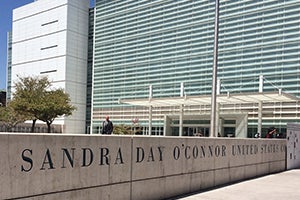
The Sandra Day O'Connor U.S. Courthouse is located at 401 W. Washington St., Suite 130, SPC 1, Phoenix, AZ 85003. This court is the primary hub for federal judicial activities in Arizona.
Evo A. DeConcini U.S. Courthouse is located at 405 W. Congress Street, Suite 1500, Tucson, AZ 85701. This court serves the southern region and handles a substantial number of cases, especially those related to border issues.
John M. Roll United States Courthouse is located at 98 West 1st Street, Yuma, AZ 85364, and the phone number is 928-329-4766. This court facilitates proceedings in the southwestern corner of the state.
The Aspey, Watkins & Diesel Building (AWD) is located at 123 N. San Francisco Street, Suite 200, Flagstaff, AZ 86001. This court supports northern Arizona, providing necessary judicial services to this part of the state.
Owing in part to the large number of cases handled by the District of Arizona, the Court is staffed by a cadre of experienced judges-including one Chief Judge, 12 District Judges, and 13 Senior District Judges (elder justices handling lower caseloads).
Why You Need a Federal Criminal Defense Attorney
The complexities of federal court require specialized legal experience since the procedures. Retaining our federal criminal defense attorneys with experience in the District of Arizona can have a significant positive impact on the outcome of your case. Below are some important reasons why you need a federal defense attorney:
- Negotiating Plea Deals: Skilled attorneys can negotiate favorable plea agreements, often reducing charges or sentencing. Most federal cases are resolved in this way without going to trial.
- Defense Planning: With knowledge of local judicial tendencies and prosecutorial strategies, a seasoned defense attorney can formulate an effective defense tailored to the specifics of the case.
- Resources: Experienced lawyers have established networks and resources that can be leveraged to support your defense.
- Courtroom Experience: Familiarity with the judges and courtroom procedures of the U.S. District Court for the District of Arizona can improve your prospects for a favorable outcome at trial.
For more information, contact the Hedding Law Firm, located in Los Angeles, CA.
Related Content: